Visualizzazione post con etichetta ethiopia. Mostra tutti i post

domenica 21 ottobre 2012

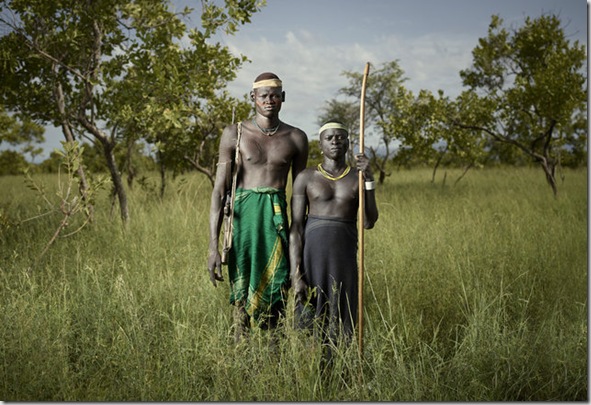
BEAUTY OF OMO VALLEY BY KEN HERMANN

Omo Valley is undoubtedly one of the most unique places on earth because of the wide variety of people and animals that inhabit it. It is located in Africa's Great Rift Valley. The region is known for its culture and diversity.
The tribes that live in the lower Omo Valley are believed to be among the most fascinating on the continent of Africa and around the world. Tours are offered to several towns and villages. It is often you come into contact with the following tribes: Arbore, Ari, Bena, Bodi, Bumi, Daasanech (Geleb), Dorze, Hamer (Hamar), Kara (or Karo), Konso, Kwegu (or Muguji), Mursi, Tsemay, and Turkana when you tour the valley.
It is estimated that the Omo Valley is home to over 200,000 tribal people. Among the ancient AfricanA woman of the Mursi tribe tribes that live in the southern part of Ethiopia, there is a wide variety of wildlife as well. Some of the animals that you will find there are the Bitis Arietans (venomous snake), crocodiles and hippopotamuses. The two main national parks in Omo Valley are the Omo National Park and the Mago National Park which are home to the majority of the wildlife in the valley.


clip_image001
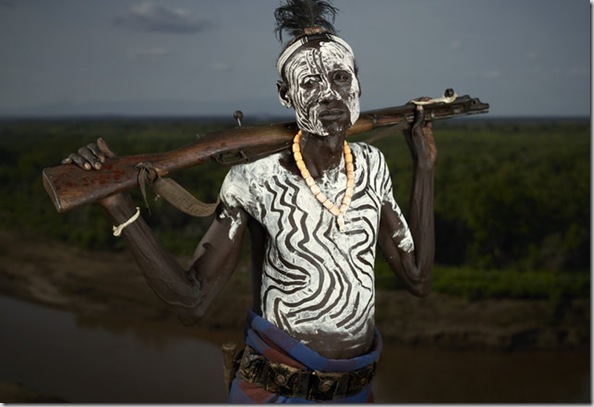
Raja - Karo tribe 


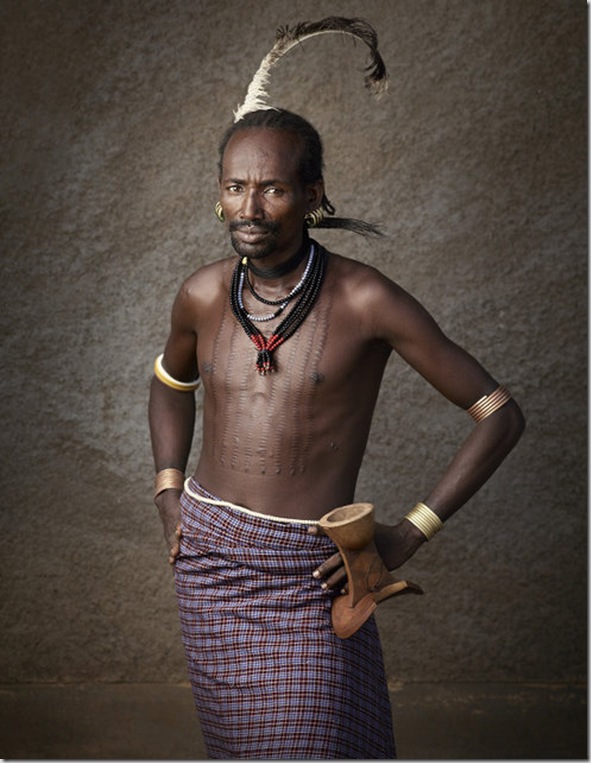
clip_image002 Uri - Hamar tribe

clip_image003 Kaja - Hamar tribe

clip_image004 Alti - Hamar tribe


clip_image005
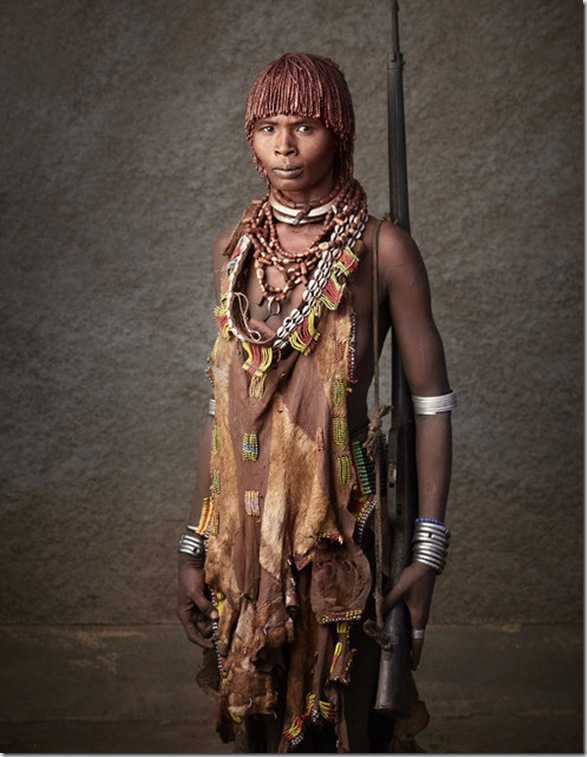
Dulla - Hamar tribe

clip_image006
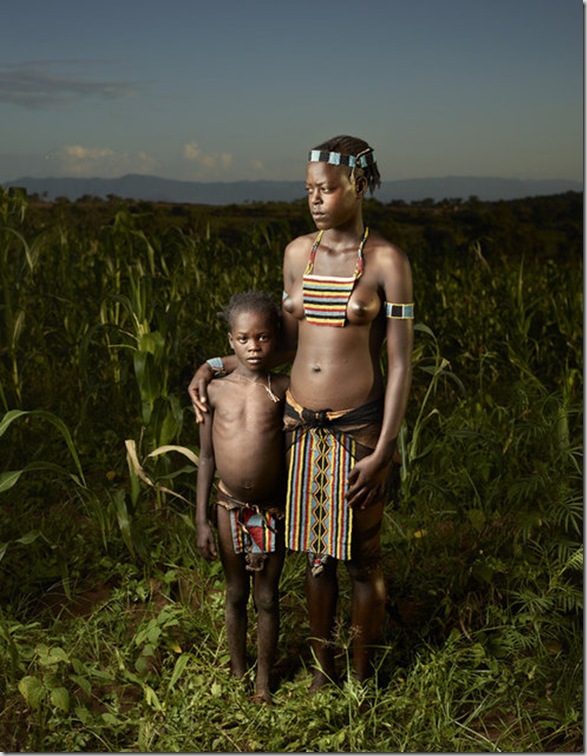
Wante & Sopa - Bena tribe

clip_image007
Kole - Hamar tribe

clip_image008
Nachore - Mursi Tribe 

clip_image009 Netaru - Mursi tribe


clip_image010
Aker - Karo tribe

clip_image011
Geyo & Alubuno - Mursi tribe


All images © Ken Hermann
Fonte
>>>

martedì 3 luglio 2012

PEREGRINATION TO BLACK JERUSALEM . LALIBELA –ETHIOPIA by FERNANDO MORELES

In the mountains of Ethiopia is one of the world´s greatest mysteries:

11 stunning Christian churches buried underground and hidden in secret caves.
These churches are in Lalibela , the town hailed by pilgrims as “ the black Jerusalem”. Every Christmas thousands of pilgrims walk during days to pray day and night, it’s a trip to the past time.
Modern archeologists remain unable to explain how this complex of rock hewn churches were built.

 1A. Thousands of Christians peregrinates to Lalibela, its a religious  promise that Ortodox Coptic of Ethiopia must do it at least one time before dying. Most of them are very poor farmers coming from isolated areas on foot during days, weeks passing famine and the cold nights at open air. Nowsdays thousand of Christians peregrinate on foot during days, weeks to lalibela. During the Middle Ages Lalibela was a centre of alternative pilgrimage to Jerusalem  for Christians Copts due to Islamic  invasion of Holy land. Monastery of Debra Damos is only accessible climbing a wall of 15 meters and everyday many monks, even older than seventy years old, go up and down. His cemetery is too much appreciated for Orthodox to be buried in. Nowadays are living around one hundred monks (in the past 6.000). It was built in isolated area at the top of a big monolithic mountain during the Islamic invasion of Tigray.
These religious centres were the salvation of Gueéz, a death language of cryptic symbols, the oldest of continent in which is written Holy Scripture.
Debra Damos is a rock fortress monastery only accessible climbing a wall of 15 meters that every day many monks, even older than seventy years old, go up. Nowadays are living around one hundred monks (in the past 6.000). It was built in isolated area at the top of a big monolithic mountain during the Islamic invasion of Tigray. These religious centres were the salvation of Gueéz, a death language of cryptic symbols, the oldest of continent in which is written Holy Scripture. Thousands of Christians pilgrimate to Lalibela, its a religious promise that Ethiopian Orthodox  must do  at least once  before dying. Most of them are very poor farmers coming from isolated areas on foot during days, weeks passing hunger and cold nights at open air. Bet Giorges - a unique rock-hewn church with groundfloor of Greek Cross -  was caved  between 1137 and 1221. A church of thirteen meters  in monolithic stone of volcanic rock called tufa.  King Lalibela after his visitation to Holy Land wanted to build a new holy city substitute of Jerusalem and  had the inestimable knowledge of Christian Egypt  whom escaped from Islamic invasion.
The whole 13 Th rock-hewn churches of Lalibela are considerate as candidate to 8 Th world wonder.
Pilgrims arriving to Bet Debra Sinai (mount Sinai house) whose interior holds the “ Jesus´cell “, o his tomb. Most of pilgrims are illiterate  farmers of isolated highland areas without exterior communication  whom are shock of Lalibela rock-hewn churches. These magnificent temples, carved from volcanic tufa( the same rock into which the persecuted Christian Troglodytes of Turkey cut their underground cities), defy the imagination. Lalibela performed this feat in order to create a substitute Jerusalem, and to save his people the increasingly difficult and dangerous pilgrimage overseas through hostile territory.  Ethiopian  Orthodox Coptic has a deep faith  with their roots sank in the early Christians and with Judaism influences. Believers kiss and touch with head the wall of church and every place around holy sites. In proof of respect everybody take off shoes before go inside religious temples. Pilgrims wrapped in theirs netelas (ceremony cloth) praying outside during a religious worship in Bet Madhane Alem church. . Ethiopian Orthodox Coptic have a deep faith  with their roots sank in the early Christians and with Judaism influences Woman praying outside Bet Medhane Alem church. 
Pilgrims walk during days or weeks to pray in Lalibela rock-hewn churches during Christmas worship. Ethiopian Orthodox have a deep faith  whose roots  sank  in the early Christians and have great influences of Judaism. Ethiopian Church developed own conventions of liturgy and spirituality. So the believers don´t go inside temples – except ancient and children, to receive Holy Communion -, but stay outside , listening sermon and before return kiss the church´s wall.
Feet of pilgrim deacon that come to Lalibela for third time , from Woldya, five days far away. Everyday and during two weeks this deacon pray in San Michael church during six hours. Pilgrims, wrapped in theirs natela (ceremony cloth), praying outside of Bet Maryann rock-hewn church the daybreak of 7 Th January that is the main day of Orthodox Christmas. 
Ethiopian Church developed own conventions of liturgy and spirituality. So the believers don’t go inside temples – except ancient and children, to receive Holy Communion -, but stay outside, listening sermon and before return kiss the church’s wall.
Prayers outside Bet Debre Sinai church also called San Michael, a rock-hewn  temple that legend place Lalibela king’s tomb and was built to repair the profanation of Holy places in Jerusalem by Islamic invasion. Ethiopian Church developed own conventions of liturgy and spirituality. So the believers don’t go inside temples – except ancient and children, to receive Holy Communion -, but stay outside, listening sermon and before return kiss the church’s wall. Deacon cross the tunnel to Asheten monastery which is located  to half day far from Lalibela. At four thousand meters of altitude has an unbelievable view and is visited for many pilgrims. Everyday a ray light illuminates during half-hour the interior of Abuna Aron rock-hewn church. Coinciding with this phenomenon priest read Holy Bible written in Gue´ez, a death language known only for the clergy and used for religious worships.
This magic hole is the unique entry of natural light but not permit that rain go inside.
Thousand of peasants peregrinate to Lalibela at Christmas to pray and listen the preaches of hermit monks in Amharic language. Most population of remote highlands are illiterate, unable to read or understand the religious worships celebrated in Gue éz, a death language known only for clergy. 
Pilgrim in a mystic trance in front of huge entry to Bet Madhane Alem rock-hewn church. For peasants that live in remote rural areas without communication the wonderful Lalibela produces a shock. Pilgrim’s tattoo. Symbols of beauty between women of Amharic and Tigrinya ethnic groups are tattoos in blue ink that decorate face, neck and hands. Cross is the most venerate tattoo between them and  an essential element that symbolise the faith of Every Orthodox Ethiopian  that can be: Latin, Greek, circle or David star form. The enormous devotion with a deep faith of Orthodox peasants is the bigger exhaust valve of a population who lives great shortages with material poverty difficult to imagine. The five hundred monks and priest of Lalibela dance and sing the whole and morning of 7 Th January around the hole and campground that put up Bet Maryam church, the most venerated temple of Holy City.
Through its long periods of geographical and political isolation, Orthodox Church has developed ceremonies and festivals that today remain unique for their unrivalled atmosphere.
The five hundred monks and priest of Lalibela dance and sing the whole and morning of 7 Th January around the hole that put up Bet Maryam church, the most venerated temple of Holy City.
Through its long periods of geographical and political isolation, Orthodox Church has developed ceremonies and festivals that today remain unique for their unrivalled atmosphere.
Women that have been unable to have children take bath in the holy water during a long time in a ritual for fertility meanwhile a priest pray at the side of pool outside of Bet Maryam church. This immersion in cold water produces a shock in this woman. Timkat  (Epiphany) celebrated 19  Th January is the commemoration of Christ’s baptism. When the water of Fasilidas pool is blessed people are splashed or immersed in a ceremony where the faithful renew their vows. Timkat  (Epiphany) celebrated 19 Th January is the commemoration of Christ’s baptism. When the water of Fasilidas pool is blessed people are splashed or immersed in a ceremony where the faithful renew their vows. Inside Bet Madhane Alem temple at the end of a ceremony at Christmas. 
Each church has three or four entries: East doors only for priest, that to the South is only for women and that to the North only for men. Once inside men go to the left and women go to right (South).
In all temples access is difficult, some are like a labyrinth that gives a clear idea of character defensive of their construction. The connection between them also is by tunnels and underground corridors that only priests know them. In all temples access is difficult; some are like a labyrinth that gives a clear idea of character defensive of their construction. The connection between them also is by tunnels and underground corridors that only priests know them. Pilgrims cooking beans during Christmas worship in the campground around Bet Madhane rock-hewn church. The basic food, always present in Amharic and Tigray houses, is the INJERA made by grain called teff, cultivate in highlands.   Lalibela, a farmer village at bottom of four thousand altitude mountains is divided by Jordan river in two sides, at south is leaving majority of five  hundred monks and priests that depend of donates after their land was nationalised  by communist regimen in 70 Th. Pilgrims cooking beans during Christmas worship in the campground around Bet Madhane rock-hewn church. The basic food, always present in Amharic and Tigray people, is the INJERA made by grain called teff, cultivate in highlands.
All images © Fernando Moleres
>>>

sabato 23 giugno 2012

I MILLE COLORI DEL DALLOL

Dallol è il nome di una cittadina dell'Afar, ma anche di un cratere vulcanico dalle caratteristiche uniche. Situato nel nord-est dell'Etiopia, nella depressione della Dancalia, il cratere è il risultato dell'esplosione di una camera magmatica della Valle del Rift, posta sotto un importante deposito di sale, lasciato dopo che il Mar Rosso si era ritirato da questa depressione. La regione, una vasta landa salina e desertica dove le temperature possono raggiungere i sessanta gradi, è considerato uno dei posti più inospitali della terra.

clip_image001
Questa vasta zona desolata è conosciuta per le sue curiose formazioni geologiche: sorgenti calde acide, montagne di zolfo, coni di sale, piccoli geyser gassosi, vasche di acidi isolate da cornici di cristalli di sale e concrezioni, di evaporiti, di zolfo, di cloruro di magnesio o di soda solidificati. Il tutto su un fondo bianco, giallo, verde o rosso ocra, colori dati dalla forte presenza si zolfo, ossido di ferro, e di vari altri minerali.Il sito, come i numerosi altri vulcani della zona è il risultato dell'allontanamento della placca arabica dalla placca africana con la creazione in prospettiva di un nuovo fondale marino in estensione dal Mar Rosso.

clip_image002
Nella lingua Afar, "Dallol" significa "disciolto", in riferimento alle molte sorgenti acide che spesso diventano trappole mortali per animali e uomini. L'ultima eruzione, di tipo freatica, del vulcano risale al 1925.

clip_image005


La Rift Valley non è altro che una struttura geologica del tutto simile alle dorsali che si trovano sommerse dagli oceani della Terra. E' una zona in cui, quindi, le zolle (o placche) continentali si separano con formazione di nuova crosta terrestre. I materiali emergono dal mantello terrestre con eruzioni vulcaniche. Questa zona infatti è costellata di vulcani attivi, come l'Erta' Ale.

clip_image003
La Rift Valley, come dicevo, è una dorsale, ma si trova in superficie. Un vero e proprio "laboratorio di geologia" a cielo aperto! Si entende in una vasta zona dell'Africa che comprende i territori che vanno dal Mozambico alla Siria. Nella Rift Valley esiste una zona,chiamata depressione del Dallol. Con i suoi 120 metri sotto il livello del mare, questa depressione è davvero straordinaria. Sotto il lago salato ribolle una sorgente di calore magmatico che obbliga l'acqua calda a uscire fra strati di sale e anidride. I minerali prima si sciolgono nell'acqua calda in salita, e poi si depositano quando questa esce e si raffredda presso le sorgenti, dove forma conetti che richiamano da vicino (sebbene ben più piccoli) gli hornitos sui flussi di lava basaltica. Zolfo, altri minerali e forse pure alghe e batteri termofili colorano il tutto come in nessun altro luogo nel mondo.
   clip_image007 clip_image009 clip_image011 clip_image012 clip_image013 clip_image014 clip_image016 clip_image017 clip_image018 clip_image019 clip_image021 clip_image022 clip_image023 clip_image025 clip_image026 clip_image028 clip_image029 clip_image031 clip_image033 clip_image035 clip_image037 clip_image038
Fonte
>>>

ShareThis

post<li>
Related Posts with Thumbnails