Visualizzazione post con etichetta ami vitale. Mostra tutti i post

venerdì 12 luglio 2013

KASHMIR, TROUBLED PARADISE | AMI VITALE

The Himalayan region of Kashmir, nestled between India and Pakistan, has been called “a paradise on earth” ever since the 16th century when Mughal emperors discovered its pristine beauty and made it their summer capital.
Today Kashmir is more famous for being one of the world's most dangerous places, a potential nuclear flashpoint. There was a time not long ago when i twas known for its poets and writers more than its gunmen. Even in 1947, during partition, extremism never had a place in Kashmir and many attribute it to the fact that Islam was brought through the gentle persuasion of Sufi saints who always emphasized humanism and tolerance.
Sadly, this gentle spirit is being lost as two nations wage war over the small piece of land nestled like a pearl in a tumultuous region. India and Pakistan have shaped their foreign policies around events in Kashmir and the result is over 80,000 lives lost, mostly native Kashmiris, in the last 15 years alone, and a region under siege.
Srinagar, the summer capital now lies neglected and pockmarked with craters. Hotels have been turned into barracks, guns peek out behind broken glass windows and netting protects bleary-eyed soldiers from the frequent grenade attacks. The surrounding mountains, once lush and dotted with delightful Alpine cottages, sit quietly as structures deteriorate and collapse. Misery is the keystone to the Kashmiris’ way of life and the new generation, overwhelmed by anger, hatred and confusion, have only heard the language of the gun. The gaping hole of years of conflict have been filled with the corpses of young men and those spaces that remain free are being filled by a whole new generation who are turning away from moderate Islam. With close to 700,000 men in uniform in the Kashmir Valley and an unending death toll listed prominently on the front page of every daily newspaper in Kashmir, the unique richness of Kashmir's history and culture can only be revived by looking towards its peaceful past.
I wanted to understand Kashmir and delve below the reflections in its still lakes. The mountains were mirrored perfectly until the oar hit the water, a crack rippled through the reflection and one began to sense that all is not what it seems. These photographs are dedicated to all those who have died and to those that are living in the shadows of those deaths.

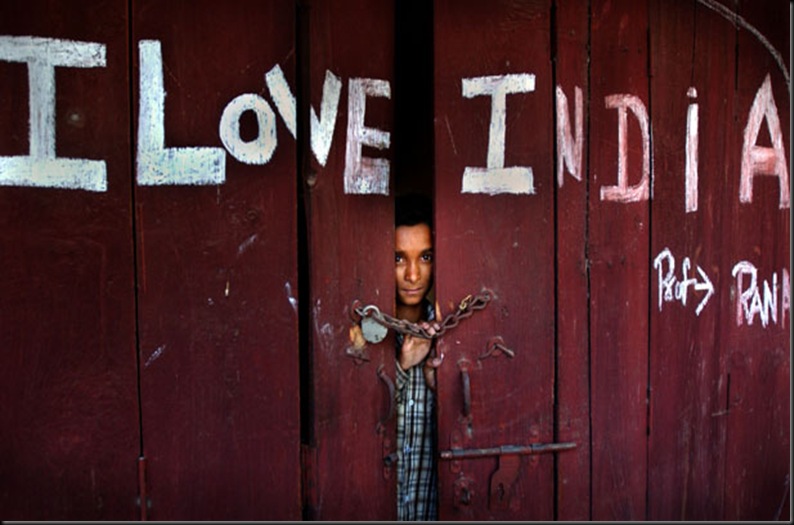
clip_image001 Kashmir India Kashmir clip_image004 Henna is applied to the hands and feet of a bride before her engagement ceremony in Srinagar, the summer capital of Kashmir.India KashmirA Kashmir woman watches the famous Sufi Saint  from outside his fence in the hopes that he will answer some of her prayers and give her spiritual guidance in the village of Sopore, August 19, 2002. Though the majority of Kashmiri people are Muslim, there is also a strong legacy of Sufism in the region. This has created a special brand of Islam throughout the Himalayan area.India KashmirHundreds of  villagers sit  outside their homes after Indian soldiers search for a militant, March 28, 2002  in Budgam district west of Srinagar. The militant hid in a mosque in a 20-hour siege. It was the fourth time in two months that separatists had sought refuge in a mosque in the Himalayan region. <br />India PakistanIndia PakistanA Kashmiri man paddles to a floating market in the early freezing temperatures before sunrise on Dal Lake in the summer capital of Kashmir, Srinagar India, November 24. In the background, echoing through the nearby mountains, gunshots and fighting could be heard. Kashmir was once a tourist hotspot but now vendors struggle to survive in a place that has seen nearly 1000 civilians killed this year alone and 1,765 wounded in a brutal conflict that the United Nations calls the most dangerous place in the world.  clip_image013
All images  © Ami Vitale

Fonte

>>>

mercoledì 20 aprile 2011

VITA QUOTIDIANA IN INDIA: AMI VITALE

Ami Vitale è una fotogiornalista indipendente americana. Le sue immagini hanno fatto il giro della stampa internazionale – Time, Newsweek, GEO, National Geographic, New York Times, The Guardian - raccontandoci molte storie dalle zone di crisi del mondo: la guerra nei Balcani, il Kashmir, la seconda Intifada, i più remoti villaggi africani. Per i suoi reportage, empatici, toccanti e incisivi, ha ricevuto numerosi riconoscimenti tra cui quello del World Press Photo, della National Press Photographers Association (NPPA), il premio Inge Morath della Magnum.

clip_image001[4]
© Ami Vitale - Una donna va a prendere l'acqua in una pozza inquinata nel villaggio di Dambas, a 80 km da Wajir, nel nord del Kenya

clip_image002
© Ami Vitale - Kolhapur, India – 19 marzo: ragazzi indiani si esercitano in uno sport vecchio di trecento anni conosciuto con il nome di "Kushti", una forma di lotta libera,
all’interno del fight club Gangawesh a Kolhapur, India. 19 marzo 2006.
In epoca feudale gli incontri di lotta erano spesso combattuti fino alla morte, ma durante i secoli la tradizione è stata gradualmente modificata fino a divenire uno degli sport più popolari della regione.
I lottatori si esercitano con totale devozione e intensità,
con esercizi, dieta, autocontrollo e celibato.

clip_image003
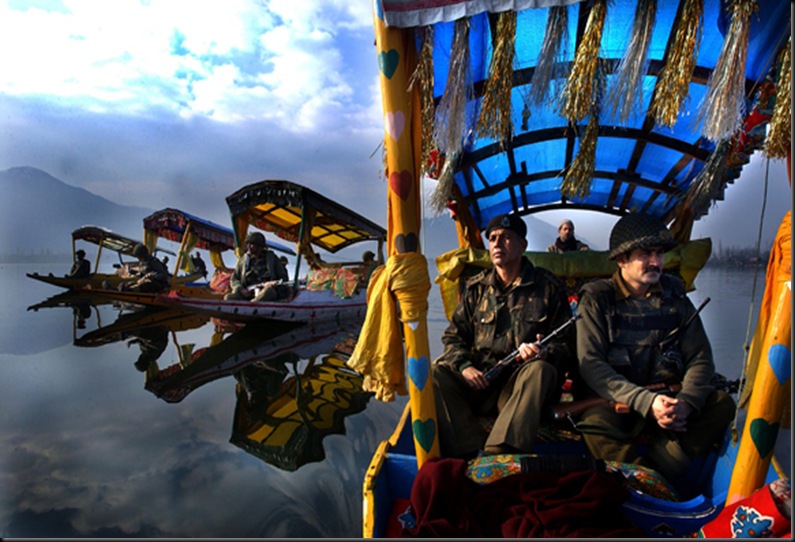
© Ami Vitale - I soldati dell’Indian Border Security Force presiedono il pittoresco lago Dal a Sringar, la capitale estiva del Kashmir

clip_image004
© Ami Vitale - Jawani Purty lava e massaggia il suo bambino Laxmi con la curcumina 21 giorni dopo la nascita nel remoto villaggio di Phuljhar nell’Orissa, India, nel luglio del 2005.
Jawani ha partorito il suo bambino da sola nella sua capanna di fango senza avere accesso ad assistenza medica professionale. Mezzo milione di donne nei paesi in via di sviluppo muoiono per conseguenze legate alla gravidanza ogni anno. Una donna ogni minuto.

clip_image001
© Ami Vitale - Bambini costretti ad abbandonare le loro case a Pargwal, India, si rinfrescano con i getti d'acqua di un'autocisterna nei pressi di Ahknoor nello stato indiano di Jammu e Kashmir.

clip_image001[6]
© Ami Vitale - Purunakashipur village - Janaki Mallick, nine months pregnant, cooks for and feeds her children. In this village, there is a trained traditional birth attendant who has delivered more than 100 babies and claims never to have lost a baby during childbirth. She had no implements other than a pair of scissors to cut the umbilical cord, a needle and thread to sew it up and some medicine to treat the wound.


© Ami Vitale - Mother, Similia village - Laxmi Dehuey with newborn baby, not yet named. In 2001 in Orissa, there were 367 maternal deaths per 100,000 births, down from 738 in 1993. Things are improving, but not fast enough

http://www.amivitale.com/
>>>

martedì 8 marzo 2011

ARRIVARE AL DI LÀ DELLA NOTIZIA

Ami Vitale è una fotogiornalista indipendente americana. Le sue immagini hanno fatto il giro della stampa internazionale – Time, Newsweek, GEO, National Geographic, New York Times, The Guardian - raccontandoci molte storie dalle zone di crisi del mondo: la guerra nei Balcani, il Kashmir, la seconda Intifada, i più remoti villaggi africani. Per i suoi reportage, empatici, toccanti e incisivi, ha ricevuto numerosi riconoscimenti tra cui quello del World Press Photo, della National Press Photographers Association (NPPA), il premio Inge Morath della Magnum.

clip_image001


GUINEA BISSAU

clip_image002
Dembel Jumpora is nestled in the eastern part of Guinea Bissau, the climate is hot and humid and by the end of the dry season, there is little water. Children take advantage of the rains and swim in the touffe when they are full

clip_image003
From left to right,m Dansar, Musa, and Briama Balde play in the touffe, a place where bricks for the huts were orginally made, now filled with water. The end of the rainy season is the richest time of year, and villagers have more opportunities to escape their daily chores.

clip_image004
Boys play soccer underneath an enormous bontang tree. Though the Fulani are a Muslim tribe, they also believe that this tree has a spirir. This mixture of animist beliefs and Islamic law creates a society which has a great respect of the land around them, the supernatural world, and the laws of God

clip_image006
clip_image007
clip_image008
Children eat the staple diet of rice from a communal bowl. During the end of the dry season, there is little to eat and many villagers will have only one meal of rice each day — but what they have, they will share equally among the family and guests.

clip_image009
In a culture where the opportunities for women to be honored, celebrated, and recognized are few, circumcision becomes disproportionately significant — in spite of the pain it brings

clip_image010
Five year-old Awa Balde clings to her mother moments after she has been circumcised. The age at which girls are subjected to this ranges from infanthood to young adulthood

clip_image011
Though the knife was dull to perform a circumcision on Awa, alcohol was used to prevent infection

clip_image012
Fama Jamaka uses alcohol to clean Awa the morning after she had been circumcised.

clip_image013
Dembel Jumpora-Baby Feet - Halima Balde holds her first child just days after he was born. The naming ceremony does not take place until a week to ten days after a child is born because of the high rate of child mortality in Duinea Bissau.

clip_image014
Khady Balde wakes up and tries to get warmed by the sun on a cold morning in early January. The only way to escape the chilling winter months is to sleep closely, side by side with the entire family.

Fonte
>>>

ShareThis

post<li>
Related Posts with Thumbnails