
He is among the most successful 1980s painters in Ubud. His works are dedicated in bold colors featuring anatomically correct figures. Hence his paintings show a fascinating assimilation of traditionalism and modernism. The traditionalist of Meja’s works is signified by his technique which still uses penelak and the illustration of his setting (houses, field, paddy fields) that strongly referred to Ubud style. While his modernity is describe with the lighting rationalization over its painting’s objects therefore Meja’s pieces can be categorized as post-traditional ones.
Meja was born in Taman, Ubud, 1952. He learned painting from I Nyoman Sinom and I Wayan Serati. During 1970s, he met Rudolf Bonnet. Trough this meeting, his modern vision developed. His paintings depict various themes. Composition of masks once occupied his style. But is 1980s, he started to paint the world of children and his reputation soon enhanced. Children black-and-white-checkered cloth (Poleng) are illustrated in various scenes, such as variety of parades, cockfighting, and kecak performance.
Meja’s paintings are collected by Museum Puri Lukisan (Ubud) and Arma Museum (Ubud). He has several talented pupils. Among them are I Wayan Matra, I Wayan Sukadana, I Made Artawa and I Wayan Asta. His painting once entered the national art competition, Indonesia Philip Morris Art Awards, as a finalist in 1997 and the winner of Indofood Art Awards 2002.
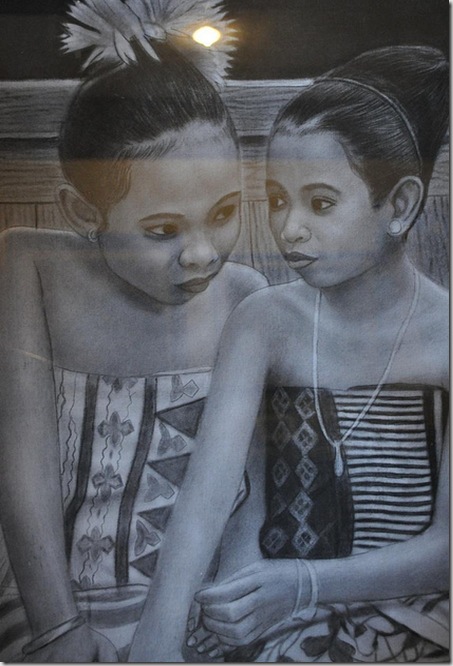


Ubud has been the center of art for centuries with the surrounding royal houses and temples as the main patrons. Prior to 1920s, traditional wayang style paintings dominated the subject matters, although Jean Couteau (1999) believes that both the secular and religious theme paintings have long been co-existing as the unity of the opposites (Rwa bhinneda in Balinese belief system).

It was not until the late 1920s that this balance was tilted toward secular art by the arrival of western artists such as Covarrubias, Le Mayeur de Mepres, Theo Meier, Walter Spies and Rudolf Bonnet. The last two artists were often credited as the agents of change that brought Balinese Art to modernity.

Their influence culminated with the founding of the Pitamaha Art Guild in 1936, with Tjokorda Gde Agung Sukawati as one of the founders. Its mission was to preserve the quality of Balinese Art in the rush of tourism to Bali. The board members of Pitamaha met regularly to select paintings submitted by its members and conducted exhibitions throughout Indonesia and abroad. Pitamaha was active until the beginning of the second world war in 1942.
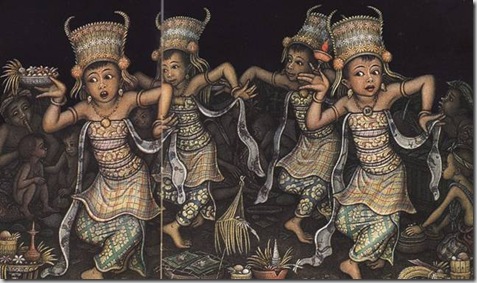
The influence of Bonnet and Spies were most welcome and flourished in Ubud, and naturally Ubud artists were most influenced by them. The subject matters shifted from religious narration to Balinese daily life capturing all aspects of ordinary life in Bali.
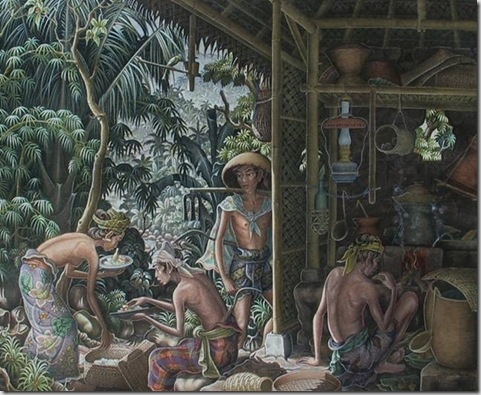
Ubud artists who were members to Pitamaha came from Ubud and its surrounding villages: Pengosekan, Peliatan and Tebasaya. Among them were: Ida Bagus Made Kembeng of the village of Tebasaya and his three sons -- Ida Bagus Wiri, Ida Bagus Made and Ida Bagus Belawa; Tjokorda Oka of the royal house of Peliatan; I Dewa Sobrat, I Dewa Meregeg, I Dewa Putu Bedil, I Dewa Dana of Padangtegal; I Gusti Ketut Kobot, I Gusti Made Baret, I Wayan Gedot, Dewa Putu Mokoh of Pengosekan; and I Gusti Nyoman Lempad.
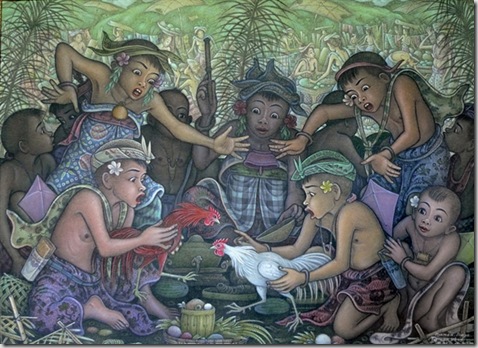
The contemporary Ubudian artists include I Ketut Budiana, I Nyoman Meja, I Nyoman Kayun, A.A. Gde Anom Sukawati, I Gusti Agung Wiranata, Ida Bagus Sena, and many others. The spirit of Pitamaha is well preserved by these artists, as illustrated below by an early work of I Nyoman Meja.

>>>
Meja was born in Taman, Ubud, 1952. He learned painting from I Nyoman Sinom and I Wayan Serati. During 1970s, he met Rudolf Bonnet. Trough this meeting, his modern vision developed. His paintings depict various themes. Composition of masks once occupied his style. But is 1980s, he started to paint the world of children and his reputation soon enhanced. Children black-and-white-checkered cloth (Poleng) are illustrated in various scenes, such as variety of parades, cockfighting, and kecak performance.
Meja’s paintings are collected by Museum Puri Lukisan (Ubud) and Arma Museum (Ubud). He has several talented pupils. Among them are I Wayan Matra, I Wayan Sukadana, I Made Artawa and I Wayan Asta. His painting once entered the national art competition, Indonesia Philip Morris Art Awards, as a finalist in 1997 and the winner of Indofood Art Awards 2002.


Ubud has been the center of art for centuries with the surrounding royal houses and temples as the main patrons. Prior to 1920s, traditional wayang style paintings dominated the subject matters, although Jean Couteau (1999) believes that both the secular and religious theme paintings have long been co-existing as the unity of the opposites (Rwa bhinneda in Balinese belief system).

It was not until the late 1920s that this balance was tilted toward secular art by the arrival of western artists such as Covarrubias, Le Mayeur de Mepres, Theo Meier, Walter Spies and Rudolf Bonnet. The last two artists were often credited as the agents of change that brought Balinese Art to modernity.

Their influence culminated with the founding of the Pitamaha Art Guild in 1936, with Tjokorda Gde Agung Sukawati as one of the founders. Its mission was to preserve the quality of Balinese Art in the rush of tourism to Bali. The board members of Pitamaha met regularly to select paintings submitted by its members and conducted exhibitions throughout Indonesia and abroad. Pitamaha was active until the beginning of the second world war in 1942.

The influence of Bonnet and Spies were most welcome and flourished in Ubud, and naturally Ubud artists were most influenced by them. The subject matters shifted from religious narration to Balinese daily life capturing all aspects of ordinary life in Bali.

Ubud artists who were members to Pitamaha came from Ubud and its surrounding villages: Pengosekan, Peliatan and Tebasaya. Among them were: Ida Bagus Made Kembeng of the village of Tebasaya and his three sons -- Ida Bagus Wiri, Ida Bagus Made and Ida Bagus Belawa; Tjokorda Oka of the royal house of Peliatan; I Dewa Sobrat, I Dewa Meregeg, I Dewa Putu Bedil, I Dewa Dana of Padangtegal; I Gusti Ketut Kobot, I Gusti Made Baret, I Wayan Gedot, Dewa Putu Mokoh of Pengosekan; and I Gusti Nyoman Lempad.

The contemporary Ubudian artists include I Ketut Budiana, I Nyoman Meja, I Nyoman Kayun, A.A. Gde Anom Sukawati, I Gusti Agung Wiranata, Ida Bagus Sena, and many others. The spirit of Pitamaha is well preserved by these artists, as illustrated below by an early work of I Nyoman Meja.


